
There is no such thing as a 50 percent discount on a Tokyo flight, because there is no fixed price to take 50 percent off. What exists is a range, and the useful skill is knowing where in that range a given fare sits before you book it.
Here is the range, by origin, for economy round trip in shoulder season.
What a Tokyo fare actually costs
| From | Floor (book now) | Normal | Overpaying |
|---|---|---|---|
| US West Coast | $550 | $650–800 | $1,000+ |
| US East Coast | $650 | $750–950 | $1,200+ |
| London | £430 | £550–680 | £850+ |
| Sydney | AU$700 | AU$900–1,100 | AU$1,400+ |
If you see the floor number, book it that day. Those fares do not sit around. The normal band is fine and is what most people pay. Anything in the third column means you are booking in a peak window or too late, and the fix is usually to move your dates by ten days rather than to keep searching.
The three weeks that wreck the price
Tokyo airfare is not seasonal in a smooth way. It is cheap most of the year with three sharp spikes.
Cherry blossom peak, roughly 25 March to 5 April. Fares run 40 percent above normal and hotels do worse. The blossom lasts about a week in any given location and the forecast only firms up two weeks ahead, so you are paying a large premium for something you cannot actually schedule. Flying in the second week of April gets you a quieter city, green parks, and a fare back in the normal band.
Golden Week, 29 April to 5 May. This is a domestic holiday cluster, and its effect on international fares is indirect but real: every hotel and shinkansen seat in the country is taken. Avoid it even if the flight looks reasonable.
Obon, around 13 to 16 August. Same problem, plus heat and humidity that make walking the city genuinely unpleasant.
The cheapest stretches are late January to early March, and mid-May to mid-June. February is cold but dry and clear, and it is the one month where the floor prices above show up regularly.
Haneda is worth paying for
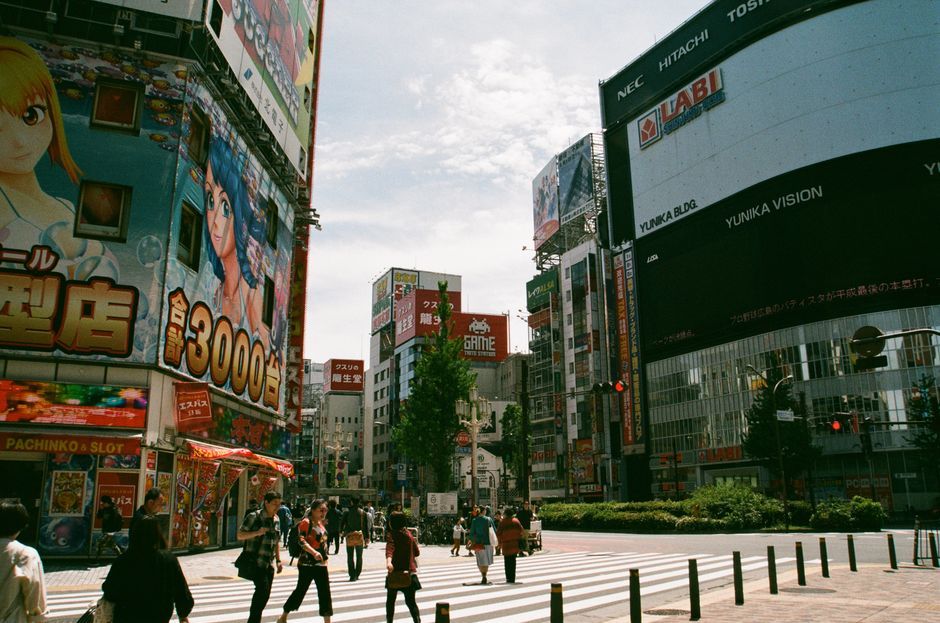
Tokyo has two international airports and they are not interchangeable. Haneda sits inside the city; you can be in Shinjuku about 45 minutes after clearing customs, and the Keikyu line costs a few hundred yen. Narita is 60 to 90 kilometres out. The Narita Express is comfortable and costs around ¥3,000 each way, so a family of three loses roughly ¥18,000 in transfers alone.
The practical rule: pay up to about $60 more per person for Haneda and you have broken even. Beyond that, take Narita and budget the transfer honestly instead of pretending it is free.
One exception worth knowing: if you land after roughly 23:00, Narita's train service has largely stopped and you are looking at an expensive bus or a very expensive taxi. A late Haneda arrival is manageable; a late Narita arrival is not.
Where the savings actually come from
Not from fare-alert services, which mostly surface the same fares the search engines already show. Three things move the number meaningfully.
Flexible dates, not flexible destinations. Shifting departure by three days either side routinely changes a Tokyo fare by $150 to $250. Tuesday and Wednesday departures are consistently cheaper than Friday and Sunday.
One-stop routings through Asian hubs. Taipei, Seoul and Singapore carriers often undercut nonstops by $200 or more. If the layover is over two hours and you are not travelling with small children, this is the largest single saving available.
Booking the return separately in some markets. This is usually bad advice but occasionally works on Australia routes where the outbound and inbound carriers price very differently. Check it; do not assume it.
The honest limitation
Tokyo is a business route as well as a tourist one, which is why the floor is relatively high and why last-minute discounting is rare. Airlines know the seats will sell. If you are waiting for a fare to collapse three weeks out, it will not — that pattern belongs to leisure-only routes in the Mediterranean and the Caribbean, not to Haneda.
Book two to four months out, at the floor or in the lower half of the normal band, into Haneda, avoiding the three spike windows. That is the whole method, and it beats any alert service.