Thailand has a reputation as a place where anyone can afford a five-star hotel. That is true in Bangkok and Chiang Mai, roughly true in Krabi, and not true at all on Koh Samui in February. Treating the country as one price band is how people end up overpaying by a factor of three.
What a good room costs, by destination
| Destination | High season (Dec–Mar) | Low season (May–Oct) | Standard |
|---|---|---|---|
| Bangkok | $110–150 | $85–120 | Genuine 5-star, riverside |
| Chiang Mai | $90–130 | $65–95 | Genuine 5-star, boutique |
| Krabi / Khao Lak | $150–240 | $85–140 | Beachfront resort |
| Phuket | $200–350 | $110–180 | Beachfront resort |
| Koh Samui | $220–400 | $120–190 | Beachfront resort |
The pattern is consistent: cities are cheap and stable, islands are expensive and volatile. A riverside suite in Bangkok in August costs less than a mid-tier bungalow on Samui in January.
Why Bangkok is the actual bargain
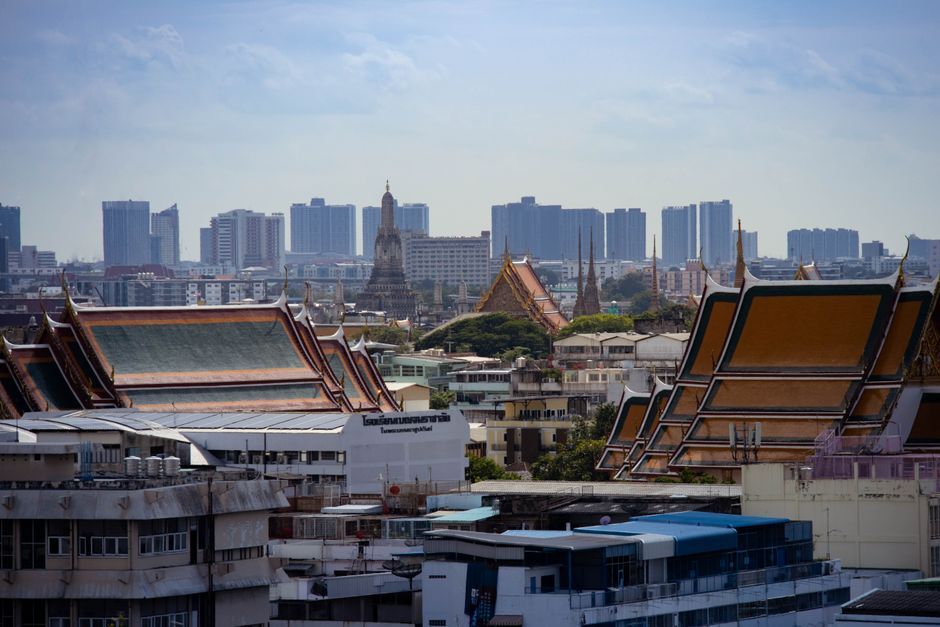
Bangkok built too many luxury hotels. The riverside strip alone has a dozen properties competing for the same guests, and unlike the islands they cannot rely on a captive high season — business travel fills weekdays and leaves weekends soft. The result is that a room with a river view, a serious breakfast and a rooftop pool sells for around $120.
Chiang Mai works the same way for different reasons: low land costs, a long low season, and a large supply of small boutique properties in the old city. Under $100 buys something genuinely lovely there.
If the goal is to stay somewhere excellent without spending much, the honest answer is to spend more nights in the cities and fewer on the beach. Most itineraries do the opposite.
The low season is better than its reputation
From May to October the Andaman coast gets the southwest monsoon, and rates fall 40 to 55 percent. The rain is not what people picture. It typically arrives as an intense burst in the afternoon lasting an hour or two, and the mornings are frequently clear. You lose some boat days — the Phi Phi and Similan crossings get cancelled in rough weather — and you gain a resort at half price with the beach nearly empty.
The Gulf coast runs on a different schedule, which is the detail most people miss. Koh Samui, Koh Phangan and Koh Tao have their wettest period in November, when the Andaman side is drying out and entering its best months. If you are going in November, go west; if you are going in June, the Gulf is the safer bet.
The charges that are not in the headline rate
Three of them, and together they can add 30 percent.
Plus-plus pricing. Thai hotels routinely quote rates followed by ++, meaning 7 percent VAT and 10 percent service charge are not yet included. A quoted 3,000 baht room is 3,531 baht. Booking sites usually fold this in; hotel websites and direct email quotes often do not.
Compulsory holiday dinners. Book an island resort across Christmas Eve or New Year's Eve and you will very likely be charged for a gala dinner whether you attend or not, at $80 to $200 per person. This is legal, disclosed in the terms, and consistently missed.
Transfers. Resort airport transfers on Phuket and Samui run $40 to $80 each way for what a metered taxi does for a fraction of that. On Samui in particular, the resort transfer is a significant profit line.
How to actually book it
Compare the rate on a booking site, then email the hotel directly and ask whether they will match it including breakfast. In Thailand this works more often than it does in Europe, particularly at independently owned island resorts in low season, where an empty room is worth more to them than a commission.
Beyond that: cities over islands if value matters, the Andaman coast from November to April and the Gulf from January to August, and never the last two weeks of December unless someone else is paying.